




Products

K107B (Upper Limb Push-Pull)
Category:
Upper and Lower Limb Rehabilitation Assessment Training System─B Series
Training area:
Product Information
Function Description
FUNCTION

This equipment will combine the shoulder press trainer and the shoulder pull-down trainer into one, which can exercise the shoulder and elbow joints.
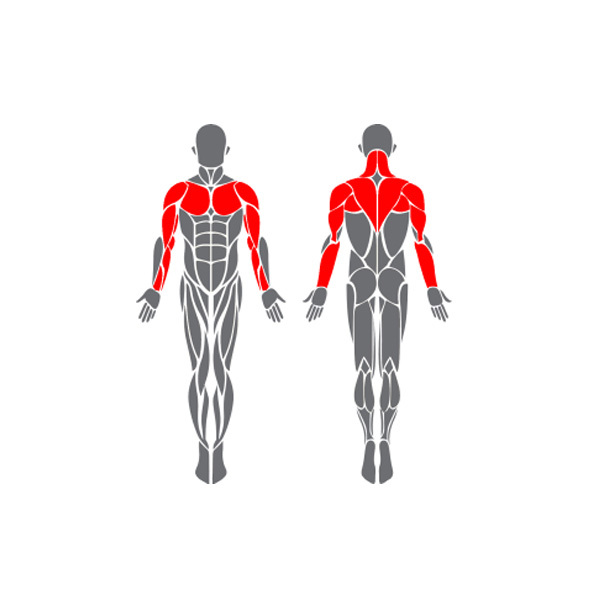
When pushing up, it mainly exercises the upper pectoral muscles, anterior deltoids, triceps, and serratus anterior. When pulling down, it mainly exercises the middle latissimus dorsi.
Operation Instructions
OPERATION
① Sit on the equipment with your back firmly against the seat back, keep your back straight, grip the handles tightly and secure the safety strap.
② Click the screen to select the training mode. When the direction of movement is selected and the training parameters are confirmed, click start. After the equipment is placed in the initial position according to the prompts of the equipment, the equipment will be inflated, and the training will start after the inflation is complete.
③ The upper limbs overcome the resistance of movement, push forward/pull back vigorously, and then return to the initial position.
④ Continue to repeat the training until the end of the training.
⑤ If you want to pause training halfway, you can click the “Pause button”. At the end of the training prompt to confirm the interface, you can click “Continue training” or “End now”.After the normal training is over, the equipment will prompt the end of the training and deflate; immediately after the end, the equipment will prompt that the training is not completed and deflate.
⑥ Before users use the device for the first time, they need to conduct an isometric assessment first, and then configure the exercise prescription for training.After the evaluation is over, swipe the card to submit the evaluation data.
INDICATIONS
REBACK
It is aimed at upper limb muscle strength training and joint mobility training, as well as cardiopulmonary function training, shoulder muscle group stretching and training.
CONTRAINDICATIONS
REBACK
People with severe cardiopulmonary dysfunction
People with transient cerebral ischemia
Early upper limb and thoracic spine fractures
Severe cardiopulmonary disease, rotator cuff injury
The fracture of the upper limb has not healed
Use with caution for patients with shoulder pain
Lumbosacral pressure sores or ulcers
Diseases prohibited by other therapists or doctors
Online Consultation
Dedicated to provide you with quality products and professional services, please keep the phone open, We will contact you as soon as possible, thank you for your support!
Related Products


Key words: